- $900 per person (no GST)
- For private, group or corporate bookings please contact us for a free quote via email: info@hostsafetytraining.com.au or call: 1300 631 011.
- 1300 631 011
- Email Us
- RTO No: 40772
Student must be deemed competent in the above pre-requisite units in order to progress to the next stage of the course. Each stage, the units will be delivered in a logical sequence.
Graduates can progress to advanced rescue qualifications, leadership roles in emergency services, or specialised training in incident management and risk control.
Completion of these units provides a pathway to further training in emergency response, rescue operations, and hazardous materials management. Participants may progress to:
Advanced rescue qualifications and specialist rescue courses
Confined space or high-risk environment training
Student Handbook – Please refer to our student handbook for our policies and more information.
Students must have the physical capability to safely undertake the practical components of this course. Practical activities may include:
Entering, working in, and exiting confined spaces while wearing appropriate personal protective equipment (PPE)
Climbing up, down, through, or under confined or restricted structures
Being temporarily suspended or wearing harnesses and other PPE
Dragging, lifting, or manoeuvring objects in confined or restricted environments
Operating in dark, low-light, or smoke-filled areas
Performing rescue operations and confined space rescue tasks
Students must also demonstrate psychological readiness, including the ability to:
Remain calm and focused in confined or restricted spaces
Make safe decisions under pressure or in potentially hazardous conditions
Follow safety protocols and respond appropriately in emergencies
Communicate clearly with others
Long pants, long-sleeved shirt, safety boots, safety glasses, and sun protection.
This two-days, 8 hours per day, face-to-face course combines theory and practical training, delivered by experienced trainers with current industry knowledge.
Theory training and assessment – students will learn to identify, assess, and control hazards, conduct risk assessments and hazard analysis, perform gas testing and interpret atmospheric conditions, issue, monitor, and control work permits, and understand confined space safety procedures, regulations, and industry best practices.
Practical training with demonstration and assessment – hands-on component provides students with the opportunity to apply their knowledge in realistic confined space scenarios. Students will participate in rescue operations, undertake confined space rescues, and identify, detect, and monitor hazardous materials at an incident. They will practice safe entry, work, and exit procedures in confined spaces, operate gas detection equipment, implement hazard control measures, follow permit procedures, and demonstrate competency under supervised, simulated emergency conditions.
The course uses a blended learning approach, including face-to-face exercises, workplace simulations, and integrated knowledge assessments, ensuring students gain the competency, confidence, and safety awareness needed to operate safely in confined spaces.
Assessment is conducted by qualified assessors using a combination of tools and methods, in accordance with the principles of assessment (fairness, flexibility, validity, reliability) and the rules of evidence (valid, sufficient, current, authentic). Students will be assessed as either Competent or Not Yet Competent based on their performance against the unit requirements. Assessment methods may include:
Direct observation of practical skills during confined space entry and work exercises
Verbal questioning to assess underpinning knowledge of hazards and safety procedures
Written responses to theory-based questions
Portfolio evidence, including completed workplace documents or work samples
A combination of the above methods
If you are assessed as Not Yet Competent (NYC), you will have the opportunity to be reassessed. You may contact Host Safety and Training (RTO 40772) to arrange your reassessment. A reassessment fee may apply.
Reassessment will focus only on the part of the assessment that was not successfully completed.
Reassessment must be completed within 60 days of the original assessment.
If the 60-day period lapses, the full assessment may need to be repeated.
Host Safety and Training RTO (40772) offers Recognition of Prior Learning (RPL) for students who can demonstrate prior skills and experience relevant to the course outcomes. Students may also be eligible for Credit Transfer (CT) for unit of competency they have previously completed through another Registered Training Organisation (RTO).
RPL and CT applications are assessed individually in accordance with our RPL/CT Policy and the requirements of the training package.
This course is also available for delivery at the client’s site by arrangement. Please contact info@hostsafetytraining.com.au for information on upcoming course locations.
Students who successfully complete all training and assessment requirements of the course will be awarded a nationally recognised Statement of Attainment for the following units of competency, issued by Host Safety and Training (RTO 40772):
PUASAR022 Participate in a rescue operation
PUASAR025 Undertake confined space rescue
PUAFIR306 Identify, detect and monitor hazardous materials at an incident
Take steps towards a promising career.
We believe that a safe workplace is a productive workplace. That’s why we offer industry-leading safety training courses tailored to the needs of workers in a variety of industries.
We have the answers to your questions! If you would like to learn more about who we are and what we do, get in touch with the team today.
Safety training is crucial because it equips employees with the knowledge and skills needed to identify and mitigate potential risks in the workplace, ultimately promoting a safer work environment, reducing accidents and injuries, and increasing productivity and efficiency.
The CSQ is an independent, not-for-profit, industry-funded body supporting employers, workers, apprentices, trainees and career seekers in the building and construction industry.
You may be eligible for funding if you are:
Get in touch with us today to see if you are eligible.
Based on the Sunshine Coast, we have offices in Gladstone, Mackay, Victoria and Northern Territory and have serviced clients across the country.
We also offer on-site training and request.
The length of training will depend on the course itself. Some course require a few hours where others take between one and five business days to complete.
The length of our training courses are included in the course description.
Some certifications do not have an expiry date, while others will expire in one – five years. However, this is dependent on the course.
Contact us to find out if you need to be re-trained. Our expert team can provide further information on what courses require re-training or re-certification.

Host Safety and Training recognise that upskilling yourself and your team with nationally recognised qualifications is a smart investment.

Skid Steer (Bobcat) Operations covers conducting skid steer loader operations in the civil construction industry. It includes; Planning and preparing, conducting machine pre-operational checks and operation of skid steer loader including stripping/spreading topsoil and materials
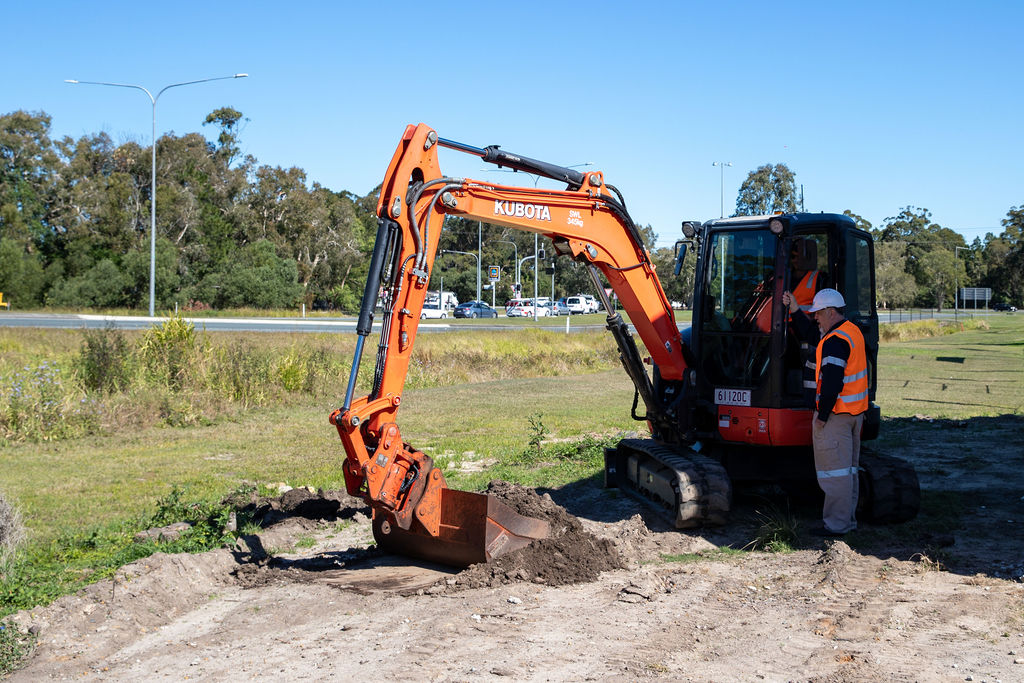
This unit describes the skills and knowledge required to operate excavator operations to lift carry and place materials and applies to those working in site-based roles.

This unit specifies the skills and knowledge required to operate a forklift truck safely in accordance with all relevant legislative requirements. Competence in this unit, does not in itself result in a HRWL licence to operate this plant.
Forklift truck means a powered industrial truck equipped with lifting media made up of a mast and an elevating load carriage to which is attached a pair of fork arms or other attachments that can be raised 900 mm or more above the ground, but does not include a pedestrian-operated truck or a pallet truck.
A person performing this work is required to hold a forklift truck High Risk Work Licence (HRWL).
This unit requires a person operating a forklift truck to:

This course is designed to give participants the knowledge and skills to operate elevating work platforms that are not classified as requiring a high-risk work (HRW) licence. After successfully completing this national-recognised course you will be trained and competent to operate; EWP (boom lift) under 11 meters and Scissor lift (up to any height)

This nationally recognised training covers theoretical and practical aspects of RIIWHS204E Work safely at heights unit of competency. It is designed to equip students with the competencies to identify hazards, follow safe work procedures, and perform height-related tasks safely across a range of environments, including construction, maintenance, mining, manufacturing, and other workplaces where duties are undertaken two metres or more above ground lev
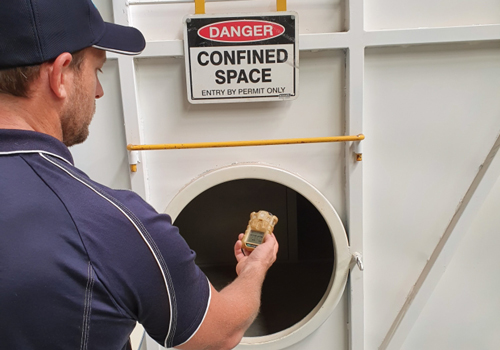
This comprehensive course equips students with the essential skills and knowledge needed to assess the safety of a working atmosphere using electronic test apparatus. It is specifically designed for individuals who may need to conduct thorough gas testing before entering a designated area or workspace, ensuring a secure environment for proposed work activities.