- 1300 631 011
- Email Us
- RTO No: 40772

Nationally recognised, expert-led safety training delivered across Queensland — 100% practical, small groups, and industry-current trainers.

Reserve your seat in an upcoming intake. Dates update live from our booking system — pick what suits and complete enrolment in minutes.
Host Safety and Training RTO (40772)
17 Industrial Avenue, Caloundra QLD 4551
Darwin NT · on-site by arrangement
Please note: This course is also available for delivery at the client’s site by arrangement. Please contact info@hostsafetytraining.com.au or call 1300 631 011 for information on upcoming course locations.
Live Availability
Choose a location, then scroll to browse dates
Student must be deemed competent in the above pre-requisite units in order to progress to the next stage of the course. Each stage, the units will be delivered in a logical sequence.
Completion of this course prepares students for roles in emergency response and rescue operations, including positions such as vertical rescue or fire and rescue officer, emergency response team member, confined space rescue specialist, or workplace safety and rescue coordinator. It also provides a pathway to further training in advanced rescue techniques, hazardous environments, or leadership roles within emergency services.
Upon completion of this training students may progress to advanced rescue and emergency response training, such as emergency response and rescue, confined space rescue, hazardous materials response within emergency services. This provides a pathway to higher-level qualifications and specialised skills for career advancement in the emergency response sector.
Fee · delivery & assessment · training locations · entry requirements
This four-day, 8 hours per day, face-to-face course combines theory and practical training, delivered by experienced trainers with current industry knowledge.
Theory training and assessment – students will gain the knowledge to understand relevant safety standards and legislation, assess risks, plan and prepare for rescue operations, correctly use and maintain rescue equipment, and develop effective decision-making and problem-solving skills in emergency situations.
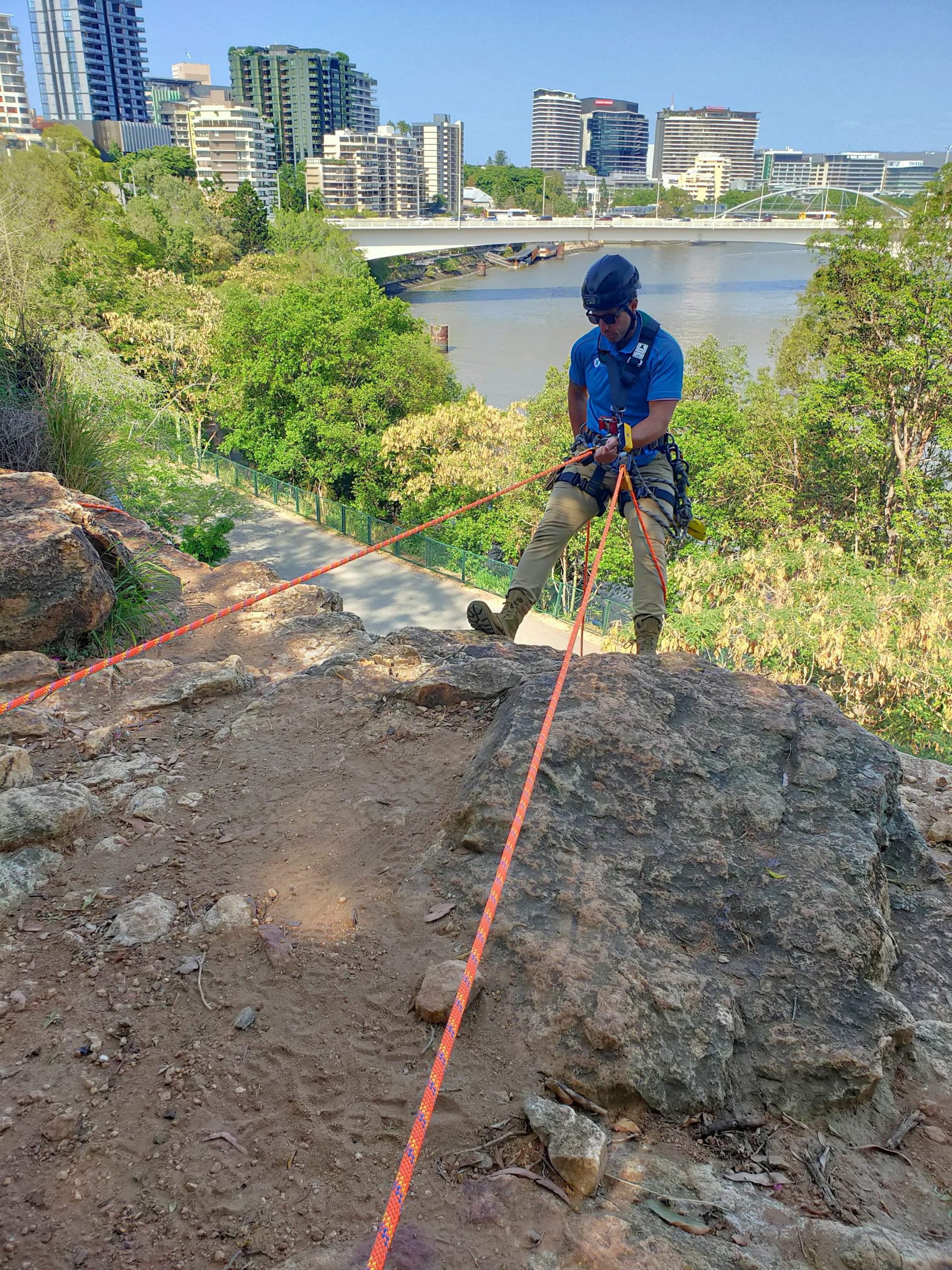
Practical Training with Demonstration and Assessment – the hands-on component allows students to apply their knowledge in realistic vertical and confined-space scenarios. Through practical exercises, they develop skills in using rescue equipment, performing safe rescue operations, working effectively as part of a team, and responding confidently to emergency situations. Competency is assessed through observation of performance in these practical tasks, ensuring students meet the required standards under supervision.
The course uses a blended learning approach, including face-to-face exercises, workplace simulations, and integrated knowledge assessments, ensuring students gain the competency, confidence, and safety awareness needed to operate safely during vertical rescue operations.
Assessment is conducted by qualified assessors using a combination of tools and methods, in accordance with the principles of assessment (fairness, flexibility, validity, reliability) and the rules of evidence (valid, sufficient, current, authentic). Students will be assessed as either Competent or Not Yet Competent based on their performance against the unit requirements. Assessment methods may include:
Direct observation of practical skills
Verbal questioning to assess underpinning knowledge
Written responses to theory-based questions
Portfolio evidence, including completed workplace documents or work samples
A combination of the above methods
If you are assessed as Not Yet Competent (NYC), you will have the opportunity to be reassessed. You may contact Host Safety and Training (RTO 40772) to arrange your reassessment. A reassessment fee may apply.
Reassessment will focus only on the part of the assessment that was not successfully completed.
Reassessment must be completed within 60 days of the original assessment.
If the 60-day period lapses, the full assessment may need to be repeated.
Host Safety and Training RTO (40772) offers Recognition of Prior Learning (RPL) for students who can demonstrate prior skills and experience relevant to the course outcomes. Students may also be eligible for Credit Transfer (CT) for unit of competency they have previously completed through another Registered Training Organisation (RTO).
RPL and CT applications are assessed individually in accordance with our RPL/CT Policy and the requirements of the training package.
This course is also available for delivery at the client’s site by arrangement. Please contact info@hostsafetytraining.com.au for information on upcoming course locations.
Students must have the physical capability to safely undertake the practical components of this course. Practical activities may include:
Performing rescue operations at height or in confined spaces
Using rescue and safety equipment correctly and safely
Participating in team-based rescue scenarios
Conducting risk assessments and implementing safety measures
Responding to simulated emergency situations
Administering basic emergency life support
Students must also demonstrate psychological readiness, including the ability to:
Remain calm and focused in high-pressure or emergency situations
Make clear and effective decisions under stress
Communicate effectively with team members during critical tasks
Respond appropriately to simulated emergencies and unexpected challenges
Maintain situational awareness and follow safety procedures at all times
Long pants, long-sleeved shirt, safety boots, safety glasses, and sun protection.
Students are expected to follow all safety instructions, actively participate in practical activities, and demonstrate safe work practices throughout the duration of the course. Practical activities may include:
Students must also demonstrate psychological readiness, including the ability to:
Required attire for face-to-face training: Long pants, long-sleeved shirt, safety boots, safety glasses, and sun protection.
Students can access a comprehensive range of training support services, including learning assistance, LLND support, academic guidance, wellbeing support and referral services. Full details are in the HOST Student Handbook and Policies & Forms.
Students who successfully complete all training and assessment requirements of the course will be awarded a nationally recognised Statement of Attainment for the following units of competency, issued by Host Safety and Training (RTO 40772):
PUASAR022 Participate in a rescue operation
PUASAR032 Undertake vertical rescue
HLTAID010 Provide basic emergency life support
PUAFIR210 Prevent injury
Trustindex verifies that the original source of the review is Google. I recently completed my Cert III in Emergency Response and Rescue through HOST and could not recommend them enough. The trainers were extremely helpful and knowledgeable in all areas, and the staff are super friendly.Posted on GoogleTrustindex verifies that the original source of the review is Google. I have recently gone through the Cert III Emergency Response and Rescue, throughout 4 weeks, I have thoroughly enjoyed each and every aspect of the training, all the trainers have been extremely helpful. Host have been able to cater to everyone and help utilise and improve our skills. All of the trainers have had a great teaching style and very helpful. I highly recommended this company to anyone very green to any industry.Posted on GoogleTrustindex verifies that the original source of the review is Google. I have recently done the Cert III Emergency Response and Rescue and enjoyed every moment of it! All of the staff and trainers at Host are super helpful and cater to everyone. Jordan Gover, the trainer I had for Vertical Rescue was especially great in his teaching style which was very interactive in theory and repetitive in the practical. Would highly recommend this company!Posted on GoogleTrustindex verifies that the original source of the review is Google. I completed a number of courses through HOST for a period of 4 weeks including the Cert 3 in Mines Emergency Response and Rescue and it was fantastic. The trainers are highly knowledgeable and the course is run smoothly. Simon made the experience much better, the course was great and would highly recommend HOST.Posted on GoogleTrustindex verifies that the original source of the review is Google. I recently completed my Certificate IV in Work Health and Safety with Host Safety and Training, and I couldn't be happier with my experience. From the very beginning, the team was helpful and responsive, making the entire process smooth and enjoyable. They were always available to answer questions and provide guidance, which made me feel fully supported throughout my course. The content was comprehensive and interesting. I highly recommend this providerPosted on GoogleTrustindex verifies that the original source of the review is Google. Recently completed the forklift course with Jordan Wardle. He was a great trainer and accesor. I highly recommend him for any course he runsPosted on GoogleTrustindex verifies that the original source of the review is Google. Would highly recommend HOST for all safety and rescue training 👍Posted on GoogleTrustindex verifies that the original source of the review is Google. A great place to get the education you need the trainers are well educated and keen to pass that knowledge on Thanks guys 🙂Posted on GoogleTrustindex verifies that the original source of the review is Google. We have used Host Safety and training for both of our Employees upskilling and training requirements as well as engaged with them to help with our clients project work. The team are very skilled and professional at what they do across both areas of expertise. We can highly recommend Host for both your Safety and Training needs.
HOST Safety and Training recognise that upskilling yourself and your team with nationally recognised qualifications is a smart investment.

This combined course teaches participants the roles and responsibilities of both the Fire Warden and Chief Warden, as they relate to emergencies in the workplace.

This nationally accredited course specifies the mandatory work health and safety training required prior to undertaking construction work in Caloundra. The white card unit requires the person to demonstrate personal awareness and knowledge of health and safety legislative requirements in order to work safely and prevent injury or harm to self and others. It covers identifying and orally reporting common construction hazards, understanding basic risk control measures, and identifying procedures for responding to potential incidents and emergencies as well as correctly selecting and fitting common personal protective equipment (PPE) used for construction work in Caloundra.
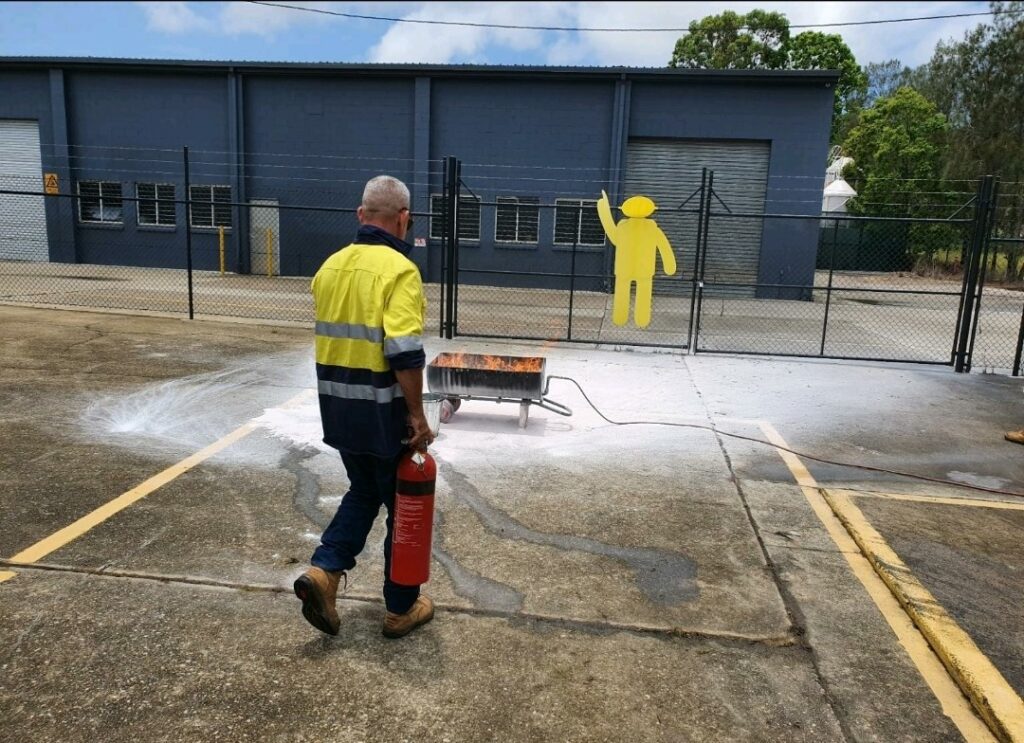
This unit of competency involves the skills and knowledge required to make decisions about the safety of occupants during a facility emergency and to give instructions on the priority order for responding to an emergency incident.

The skill set specifically addresses the regulatory requirements for open‑cut coal mining training set out in Recognised Standard 11 (S11) under the Coal Mining Safety and Health Act in Queensland.
This nationally recognised skill set equips students in the coal mining industry with the essential knowledge and skills to work safely on site. Students develop core competencies in hazard identification, risk assessment, and risk control, providing a foundation for site-specific inductions.
Specifically designed for the resources industry, this training has been recognised as an industry benchmark and is widely adopted by resource companies, contractors, and labour hire providers. The program aligns with Queensland regulatory requirements and supports safe work practices for anyone entering, or preparing to enter, the Queensland coal mining sector.

This unit is appropriate for those working in operational roles. Licensing, legislative, regulatory and certification requirements that apply to this unit can vary between states, territories, and Industry sectors. Relevant information must be sourced prior to application of the unit.

This unit specifies the outcomes required to perform slinging techniques, including the selection and inspection of lifting gear and/or the directing of the crane operator in the movement of the load when the load is out of view of the crane/ operator for licensing purposes.
Talk to our team about start dates in Caloundra, Darwin or on-site at your workplace. We’ll match the course to your roster.
📞 1300 631 011
✉ info@hostsafetytraining.com.au