Whether you’re a large multi-national, or a small locally run business, safety should be one of your first priorities – for you, your employees and your customers – and we would love to help you achieve this.
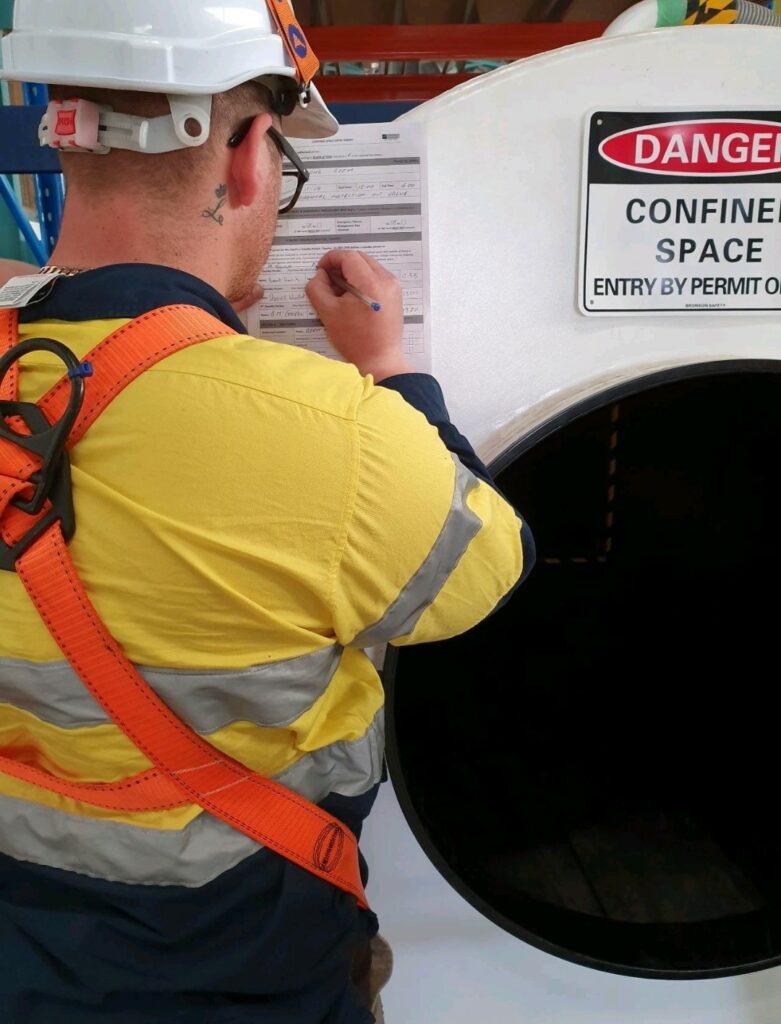
Learn to manage workplace risks, identify hazards, and safely issue work permits in this practical, hands-on training program. This course combines nationally recognised units – MSMPER300 Issue work permits, MSMWHS201 Conduct hazard analysis, and RIIRIS201E Conduct local risk control to equip students with the skills needed to maintain safety and compliance on-site.
Through theory and practical exercises, students will gain the confidence to conduct hazard analyses, implement local risk controls, and issue work permits in accordance with workplace procedures and legislative requirements.
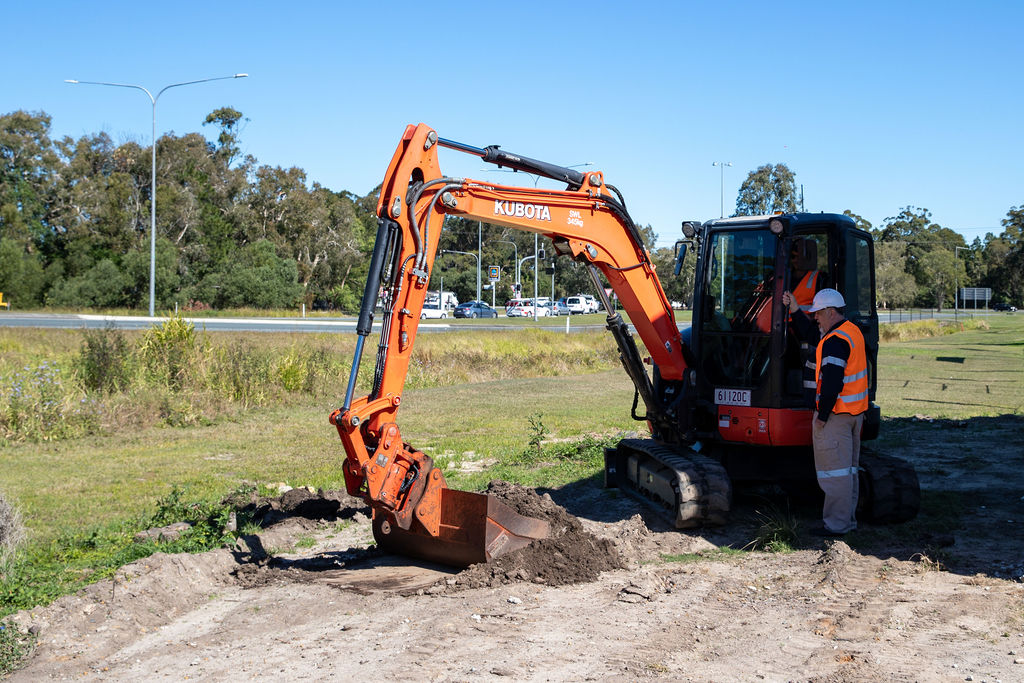
This training will teach the participant the skills and knowledge required to identify, locate and protect underground services in preparation of a site for construction operations; this includes searching for known or potential services or utilities which may exist under the surface of a specified excavation site.
This combined course teaches participants the roles and responsibilities of both the Fire Warden and Chief Warden, as they relate to emergencies in the workplace.
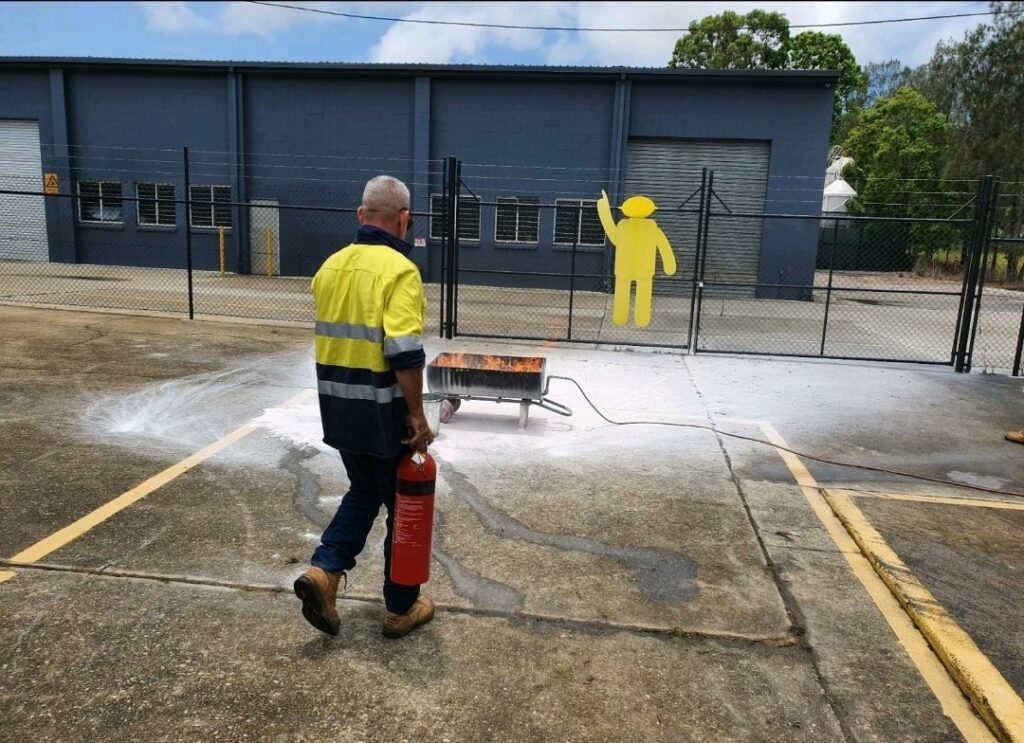
This unit of competency involves the skills and knowledge required to confine small emergencies in a facility and it applies to occupants who are required to have first attack firefighting skills. It includes preparing for emergency situations, identifying and assessing an emergency, safely confining emergencies, using initial response equipment and reporting on the facility’s emergency response.
This unit of competency involves the skills and knowledge required to make decisions about the safety of occupants during a facility emergency and to give instructions on the priority order for responding to an emergency incident.
This unit of competency involves the skills and knowledge required to work within the command, control and coordination structure of an Emergency Control Organisation (ECO). An ECO’s priority is the safety of facility occupants and visitors during an emergency which means ECO members are responsible for pre-emergency, emergency and post-emergency actions. It includes undertaking pre-emergency planning, taking appropriate actions in an emergency and assisting with post-emergency activities.
"Fantastic place to use (Working at Heights) Stuart Gunn (Operations Manager) was out trainer for the Working at Heights course for myself and my work colleagues. He was easy to talk to, great communication and training, made it an enjoyable experience especially for people who have not been in a physical classroom in a few decades since highschool. The theory and practical components were well organised and presented to all class members and individual questions for industry standards and for individual situations were answered as best as possible"
"We have used Host Safety and training for both of our Employees upskilling and training requirements as well as engaged with them to help with our clients project work. The team are very skilled and professional at what they do across both areas of expertise. We can highly recommend Host for both your Safety and Training needs."
"Thankyou for your training and support. Host Safety Training was able to do the impossible for us in such short notice and come onsite for our induction. They were efficient and informative. We highly recommend Host as your easy to deal with Trainer for all your required Tickets. Cannot thank Host Safety Training enough for your ability to help us in such short notice. Thank you Megan, you gave me peace of mind and reassurance our guys were in the right hands. from the HATFIELD Contracting Crew."
"Matt and the team at Host are the best in the business. I've been back multiple times to train for work and they always go above and beyond. Very knowledgeable, helpful, professional and easy to deal with. I would definitely recommend Host. I have completed courses with multiple training agencies and found Host to be the best overall experience"
"Every time I contact Host Training Caloundra they're amazingly flexible and quick to get back to me. Our bookings are usually last minute but they always seem to accommodate us. Their office staff are amazing to deal with. Efficient and quick! Certificates are always emailed through same day and the price (with or without CSQ funding) is great! I've continue to use them for all our staff training and highly recommend them! Danielle Wieriks, Operations Manager, Hush Energy."