The RII30719 Certificate III in Emergency Response and Rescue is a nationally recognised qualification that develops the skills and knowledge required to respond to and manage workplace emergencies. Participants learn to operate safely and effectively as members of an Emergency Response Team (ERT) across a range of workplace contexts.
This qualification is designed for individuals employed, or seeking employment, in the mining, construction, and resource industries where emergency preparedness is essential. Training, delivered by industry experts, includes both theory and scenario-based practical activities to build competence in responding to incidents such as fires, rescues, and hazardous situations.
Please review the prerequisites for the specific units listed below:
All prerequisite units will be delivered during the course in the required sequence to ensure compliance with prerequisite requirements.
On completion of this qualification, graduates will be able to:
Respond effectively to workplace emergencies as part of an Emergency Response Team (ERT)
Apply emergency response procedures to incidents such as fires, rescues, and hazardous situations
Graduates are equipped with the practical skills and knowledge required to undertake emergency response and rescue operations in high-risk environments, including mining, oil and gas, construction, and heavy industry. Typical career pathways include:
Emergency Services Officer (ESO)
Mines Rescue Team Member
Safety and Emergency Coordinator
Graduates may further develop their skills and knowledge through advanced qualifications, including:
RII41319 Certificate IV in Emergency Response Coordination
PUA40319 Certificate IV in Public Safety (Firefighting Supervision)
These pathways provide opportunities to progress into higher-level roles within emergency response, workplace safety, and supervision.
Student Handbook – Please refer to our student handbook for our policies and more information.
To enrol in the RII30719 Certificate III in Emergency Response and Rescue, students must meet the following entry requirements:
For further information or enquiries regarding course enrolment, please contact info@hostsafetytraining.com.au
OPTION ONE: Face-to-Face: 20 Days of in-person training, excluding weekends.
OPTION TWO: Face-to-Face Extended / Self-Paced: Attend in-person modules over a period of up to 12 months, with flexible scheduling to accommodate individual learning needs.
The RII30719 Certificate III in Emergency Response and Rescue is delivered through a combination of theoretical and practical components, led by experienced and qualified trainers who maintain current industry knowledge in fire, emergency response, and rescue operations. The course is delivered through a combination of structured learning methods, including:
This blended approach provides flexibility while ensuring that students develop both the theoretical knowledge and hands-on practical skills required to demonstrate competency in emergency response and rescue operations.
Assessment is conducted by qualified assessors using a combination of tools and methods, in accordance with the principles of assessment (fairness, flexibility, validity, reliability) and the rules of evidence (valid, sufficient, current, authentic). Students will be assessed as either Competent or Not Yet Competent based on their performance against the unit requirements. Assessment methods may include:
Host Safety and Training RTO (40772) offers Recognition of Prior Learning (RPL) for students who can demonstrate prior skills and experience relevant to the course outcomes. Students may also be eligible for Credit Transfer (CT) for units of competency they have previously completed through another Registered Training Organisation (RTO).
RPL and CT applications are assessed individually in accordance with our RPL/CT Policy and the requirements of the training package.
Students who successfully complete all training and assessment requirements of the course will be awarded the nationally recognised qualification in RII30719 Certificate III in Emergency Response and Rescue issued by Host and Safety Training (RTO 40772).
Graduates will receive a Testamur for the qualification, along with a Record of Results listing the units of competency achieved:
This qualification is issued in accordance with the Australian Qualifications Framework (AQF) and complies with the Standards for Registered Training Organisations (RTOs) 2025.
Please note:
In addition to the Testamur and Record of Results, students may also receive a Statement of Attainment for units completed outside of the qualification packaging requirements, depending on workplace needs or specific enrolment arrangements.
Additional units of competency that may be delivered and assessed include:
Successful completion of these units will result in a separate Statement of Attainment being issued.
17 Industrial Avenue, Caloundra QLD 4557
This course is available for delivery at the client’s site by arrangement. Please contact info@hostsafetytraining.com.au for information on upcoming course locations.
Take steps towards a promising career.
We believe that a safe workplace is a productive workplace. That’s why we offer industry-leading safety training courses tailored to the needs of workers in a variety of industries.
We have the answers to your questions! If you would like to learn more about who we are and what we do, get in touch with the team today.
Safety training is crucial because it equips employees with the knowledge and skills needed to identify and mitigate potential risks in the workplace, ultimately promoting a safer work environment, reducing accidents and injuries, and increasing productivity and efficiency.
The CSQ is an independent, not-for-profit, industry-funded body supporting employers, workers, apprentices, trainees and career seekers in the building and construction industry.
You may be eligible for funding if you are:
Get in touch with us today to see if you are eligible.
Based on the Sunshine Coast, we have offices in Gladstone, Mackay, Victoria and Northern Territory and have serviced clients across the country.
We also offer on-site training and request.
The length of training will depend on the course itself. Some course require a few hours where others take between one and five business days to complete.
The length of our training courses are included in the course description.
Some certifications do not have an expiry date, while others will expire in one – five years. However, this is dependent on the course.
Contact us to find out if you need to be re-trained. Our expert team can provide further information on what courses require re-training or re-certification.
Host Safety and Training recognise that upskilling yourself and your team with nationally recognised qualifications is a smart investment.
Skid Steer (Bobcat) Operations covers conducting skid steer loader operations in the civil construction industry. It includes; Planning and preparing, conducting machine pre-operational checks and operation of skid steer loader including stripping/spreading topsoil and materials
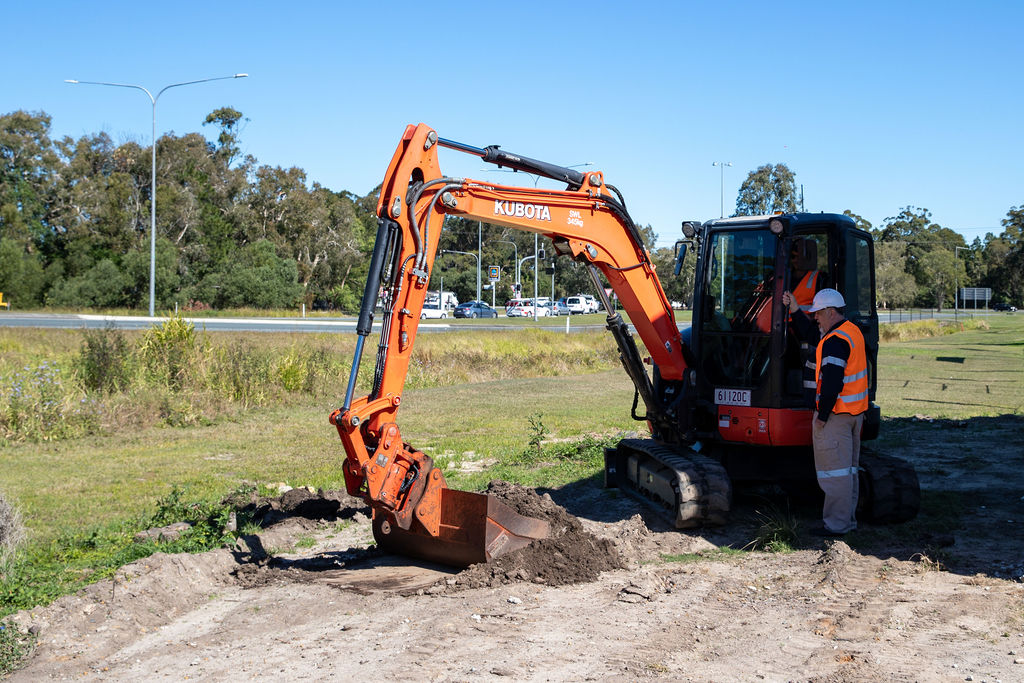
This unit describes the skills and knowledge required to operate excavator operations to lift carry and place materials and applies to those working in site-based roles.
This course specifies the skills and knowledge to operate a forklift truck safely. This course requires a person operating a forklift truck to; Plan the work, conduct routine checks, shift loads in a safe manner
This course is designed to give participants the knowledge and skills to operate elevating work platforms that are not classified as requiring a high-risk work (HRW) licence. After successfully completing this national-recognised course you will be trained and competent to operate; EWP (boom lift) under 11 meters and Scissor lift (up to any height)
This nationally recognised training covers theoretical and practical aspects of RIIWHS204E Work safely at heights unit of competency. It is designed to equip students with the competencies to identify hazards, follow safe work procedures, and perform height-related tasks safely across a range of environments, including construction, maintenance, mining, manufacturing, and other workplaces where duties are undertaken two metres or more above ground lev
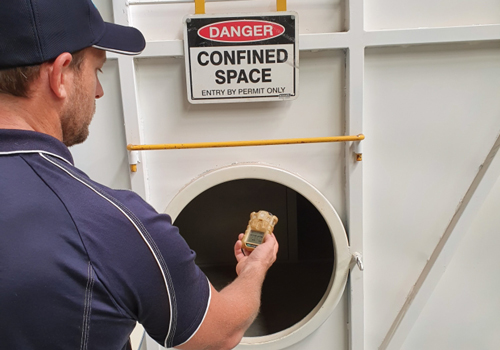
This comprehensive course equips students with the essential skills and knowledge needed to assess the safety of a working atmosphere using electronic test apparatus. It is specifically designed for individuals who may need to conduct thorough gas testing before entering a designated area or workspace, ensuring a secure environment for proposed work activities.